
PRE-CONFERENCE WORKSHOP ON DECEMBER 9
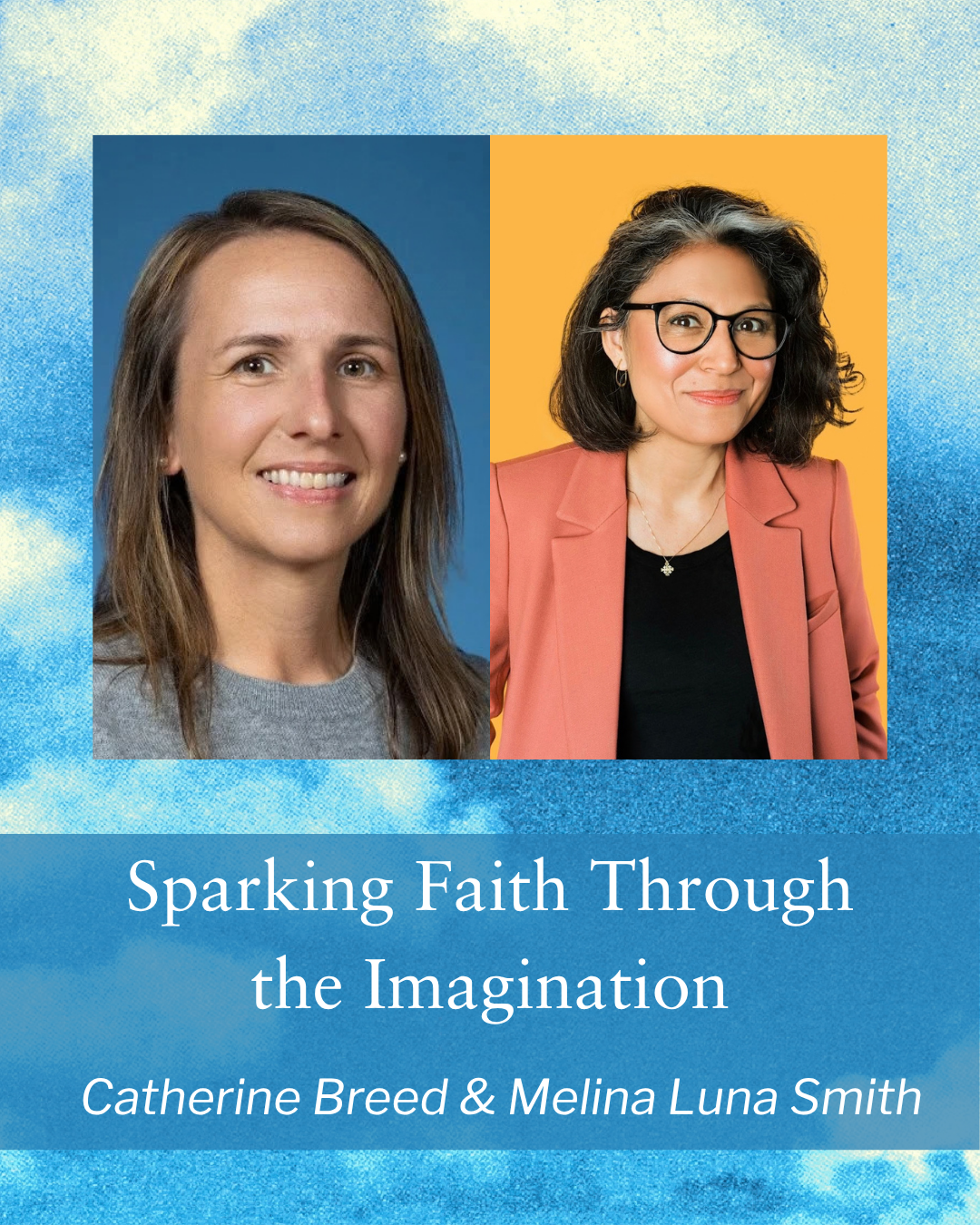
Sparking Faith through the Imagination
Presenters: Catherine Breed & Melina Luna Smith
During this interactive conversation we will dive into fresh ways to spark faith for young people and grown-ups alike. Through imagination, art, play, social-emotional awareness, and creativity, we will seek to bring God's big story to life and see ourselves as part of it.
This Workshop will be an extention of my recent (2025) Doctor of Ministry Research Project from The Toronto School of Theology which explored the spiritually transformative power of Rembrandt Van Rijn’s Bblical art. It was based on a theory by James McCullough whose book entitled , Sense and Spirituality: The Arts and Spiritual Formation (2015). McCullough theorized that through repeated encounters, the arts mediate, spiritual formation through 2 parallel processes 1. ascesis (spiritual training) and 2. aesthesis (sensory perception). Through both ascesis and aesthesis, the arts provide opportunities to develop and hone skills analogous to contemplation.
These specific skills required to engage works of art are like those capacities required for progressive spiritual development. Through repeated exposure to art, spiritual formation develops specific dispositions, which include slowing down and waiting; attentiveness; careful observation; openness and receptivity; suspension of judgement; inhabiting/indwelling of story; imaginative/or intuitive engagement; letting go/surrender; resolution of conflict or cognitive dissonance; self-transcendence/epiphany or new insight.
Using select works of Rembrandt’s biblical narrative paintings the presenter will facilitate viewers to engaged in separate but related Visio Divina and visual exegesis exercises during each session. At the conclusion of the session, participants will fill out a simple survey directly related to each of the specific dispositions described above as they were experienced during the Visio Divina and visual exegesis exercises measuring the dispositions.
What if belonging is not the reward for spiritual growth, but the place where spiritual growth begins?Many churches unintentionally communicate that people must believe, behave, or fit in before they truly belong. Yet throughout the Gospels, Jesus consistently reverses that order. He welcomes people before they understand him, shares meals before they change, and forms disciples through relationship rather than prerequisites.This workshop explores how radical hospitality is not simply a strategy for welcoming newcomers but a theological foundation for Christian formation. Drawing from Scripture, developmental psychology, contemplative spirituality, and years of ministry with children, families, and intergenerational communities, we'll examine how belonging creates the conditions in which authentic transformation can flourish.Together we'll explore how churches can cultivate environments where curiosity is honored, questions are welcomed, diversity is embraced, and every person is invited into deeper relationship with God and one another. Participants will reflect on Gospel stories of welcome, identify the explicit and implicit barriers to belonging within their own ministries, and develop practical experiments for creating communities where people encounter grace before expectations.Rather than lowering the call to discipleship, belonging before becoming trusts that love, relationship, and the work of the Holy Spirit remain God's primary means of transformation. Participants will leave with theological grounding, practical tools, and renewed imagination for cultivating churches where belonging becomes the beginning—not the reward—of lifelong faith formation.
The young people in your ministry are growing up in a world that won't stop shifting, and they need leaders who can design faithful, creative responses alongside them. Design the Future introduces practical tools that blend human-centered design, strategic foresight, and generational understanding, with accessible frameworks you can bring straight back to your context to guide young people toward resilient, hope-filled futures.
In times of transition and rapid cultural shift, Christian formation often defaults to maintenance, managing programs, solving immediate problems, and reacting to the pressures of the day. But what would happen if we traded spiritual survival mode for holy expectation?
This interactive workshop invites us as ministry leaders to step beyond the boundaries of conventional planning and into the expansive landscape of sanctified imagination. Grounded in Ephesians 3:20, this session explores how God’s power working within us is not a call to try harder, but an invitation to dream bigger, deeper, and more courageously about what God is forming in our communities.
In this interactive workshop Jewish educator and author Sarah Rosenson will demonstrate and lead discussion on three creative approaches to teaching the Bible. The modern phenomenon of fan fiction involves readers writing creative pieces that answer questions left open in favorite works of literature. This also describes the ancient and ongoing Jewish tradition of midrash, where readers write stories filling in gaps in the Bible. Teachers can bring both ancient and modern midrash into the classroom for their students to read, and they can challenge students to write midrash themselves. Sarah will also talk about Bibliodrama, where the group leader asks questions of Biblical characters. Anyone in the class can answer any question, but they must answer in the first person as that character. This is a collective way of creating midrash together right in the classroom. And finally Sarah will discuss using paintings of Biblical scenes in class, which can be particularly helpful for visual learners. For all learners, looking at a painting and thinking about how it tracks or deviates from the text, and what choices the artist made, is another way for them to deepen their connection with the Biblical text.
This workshop will help worshiping communities borrow wisdom from intercultural missiology to develop a sustainable model of campus ministry that fits their ecclesial and campus contexts. Participants will walk away with a posture, a plan, and concrete practices of ministry that will aid them in discerning the types of ministry God is calling them to alongside college students and young adults, and suggestions for casting vision to deepen this ministry within their congregations and dioceses.
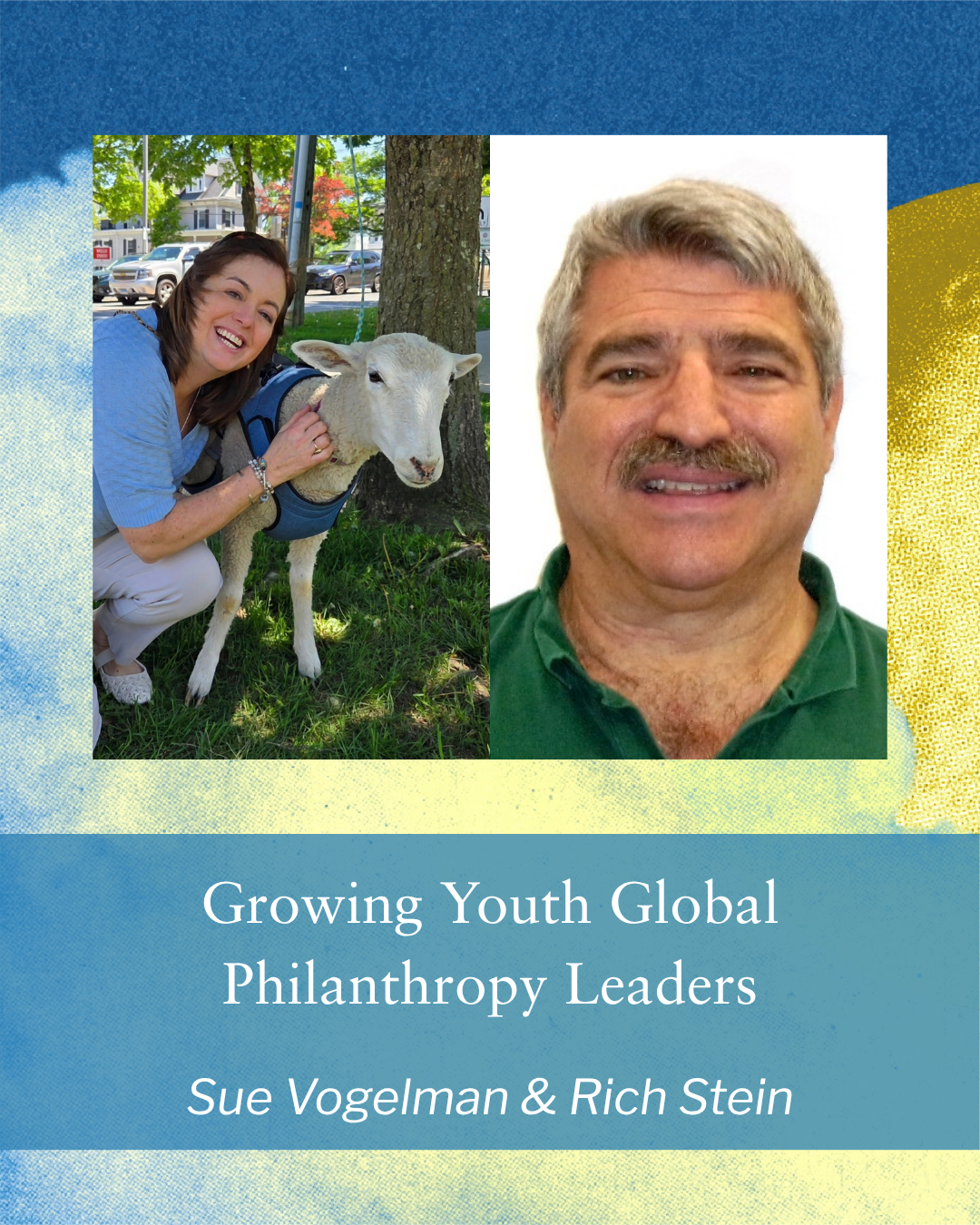
How do we help high schoolers to believe that they can make a difference in the world? How do we encourage them to explore how stories of the Bible are applicable in the present-day? This workshop will outline an innovative ministry called Global Philanthropy Leaders (GPL), that allows youth to do both of those things while also learning about global economics and how to change lives. GPL teaches youth how to support budding entrepreneurs in some of the poorest countries in the world to start or expand a microbusiness that improves the lives of their family and community. High schoolers have proven themselves capable of making sound financial decisions about lending small amounts of money on the crowd-funding website kiva.org. Microlending has allowed millions to escape crushing poverty.
Meeting monthly, youth use an ancient technique called Dwelling in the Word to discuss a passage of Scripture leading to profoundly beautiful discussions. The scripture readings are chosen to pertain to a lesson in Economics that is tailored to this age group. After the introductory lesson of the day, the group chooses loans according to financial guidelines designed to maximize the probability of being repaid. In this way, we can recycle the payments into new loans. This workshop will show you how to set these guidelines so that the youth can easily and independently follow them to create the best loans and maximize the financial support. This three-year curriculum includes topics such as the U.N. Sustainable Development goals; Hunger, Starvation, and Malnutrition; Nobel Peace Prize winner and inventor of microlending Muhamad Yunus; Impact of Tariffs; The Atlantic Slave Trade; How Microlending Impacts Gender Inequality in Developing Countries, and many more.
Lesson slides will be provided to workshop attendees and those slides will include the scripture passages and other activities like check-ins and follow up.GPL was developed in 2017 with a group led by Rich Stein, a life-long economist and financial trader who has worked with Kiva for decades, and The Rev. Dr. Whitney Altopp, Rector of St. Stephen's Church. Sue Vogelman, Associate for Youth and Family Ministry, has co-led GPL for the last three years at St. Stephen's adding enrichment activities and current best educational practices. Come join us for a thought-provoking session on how our youth are not just the leaders of tomorrow, but can already lead us today!
The word "imagination" typically conjures up images of, well, images – but what if your mind doesn't generate images? New research into visualization shows that both autism and ADHD are linked to higher likelihoods of aphantasia (the inability to generate mental visuals) and hyperphantasia (the ability to generate exceedingly realistic and detailed mental images), marking the extreme poles of just one typical human capacity. Using this emerging science as a jumping off point, this workshop will explore how disability and neurodivergence shape experiences and approaches to theological imagination. Other topics will include the role of literal thinking, vision disabilities, and access to spoken, written, and signed languages in shaping our individual theological imaginations as well as the way we present formation opportunities. By drawing on insights from disability studies, the cognitive science of religion, neuroscience, and psychology, we can enrich our personal theologies and develop more expansive pathways for sharing and shaping “images” of faith, whether in the classroom or from the pulpit.
Grounded in the energy of the child’s imagination, explore how you can apply three stages of love and justice work (education, invitation, response) with children. Beginning with guidance from Maria Montessori and Sofia Cavalletti’s characteristics of the child, discern about the child or children in your midst: what are their dreams and passions, what sparks their imagination, what is at the heart of their prayer? With the example of children at Christian Family Montessori School to protect the sacred land of Oak Flat, enter into a framework that will guide you to: identify Biblical texts to support the child’s imagining of a just future, brainstorm possible current needs to introduce to the children in your home or church community, places or people or topics in need of God’s love and justice, envision next steps in addressing those needs, with children taking the lead. Key outcomes for this session include: List ways to support children in the development of their own foundational imagination and knowing: love of and for God, and arc of history towards shalom Choose 1-2 injustices, tied to our faith and connected to the passions of the children, to introduce the children in your life or work. List possible invitations for prayer and action to offer to the children. Pray together for the Spirit’s guidance as we consider the next stages of this journey.The framework of the three stages will be shared through a visual summary as well as through a step by step planning worksheet.
Perhaps you've heard it before in your own congregation: "I really thought I was never going to church again... until I found this church." There are plenty of people who have never been members of the Church before or who have left the church, and for plenty of good reasons. There are also plenty of people who have never even -heard- of churches that have affirming values, progressive theologies, women or queer clergy, or who see the bible as a salve rather than a bludgeon. And for some of them, there just might be a path into membership, discipleship, and ministry in the Church if the Church can be gentle enough to cultivate relationship with people who are bravely coming alongside church for the first time or for the first time in a long time.This workshop will offer some best practices for working with nones and dones, including some reflection about the theology and ecclesiology that sets the progressive church apart, what it means for pastoral relationships, and some time for imagination and planning about ways that the church can facilitate nones' & dones' (re)exploration of Christian community, worship, and theology.
Jesus tells us that the first commandment is to “Love the Lord your God with all your heart and with all your soul and with all your mind and with all your strength” (Mark 12:30, NIV). What happens, though, if our mind works differently than others – and we aren’t sure how to take care of it? This session is primarily geared towards helping neurodivergent leaders take care of their mental and emotional health. Many neurodivergent people (ND) report feeling like they work twice as hard to do the same tasks as everyone else. This is often compounded by feeling the need to “mask,” or hide their true feelings or experiences to fit into the outside world. For ND ministers, the challenges of ministry can exacerbate the challenges they already face. This session especially focuses on practical accommodations ND ministers can make that can be adapted to most ministry contexts and budgets. We’ll explore the challenges of being a ND minister, the advantages of being an ND minister, and accommodations used in various contexts and how to ask for them. While adapting to the challenges of neurodiversity can be frustrating, investing in our own health equips us to be the best version of ourselves, which ultimately makes for better ministry.
How are churches reimagining Christian Formation programs that are not strictly defined by age or grade level? Does a shared life of practice, storytelling, service, prayer, and reflection rather than a ladder of age-based classrooms make sense to your formation ministry context?This workshop will explore a variety of strategies for crafting a flexible-age model of faith formation in which children, youth, families and adults of all ages engage in formation pathways based on interest, readiness, relationships, and spiritual curiosity. Rather than assuming that age or grade alone determines how people grow in faith, we will envision how to cultivate structures that honor developmental needs while also creating opportunities for intergenerational belonging and learning.Grounded in the value of intentional intergenerational connection as a primary place of growth within the Body of Christ, the workshop will offer both a practical framework and adaptable strategies for designing formation programs that are responsive to the community, inclusive of many ages, stages and spiritual starting points and oriented toward deeper participation in the life of the Church.The framework and strategies discussed can be applied to a variety of settings - multi-age settings within one generation (i.e. the “one room schoolhouse” model of formation programming), cross-generational connections between two or more generations and also fully intergenerational programs for the entire church community. This workshop is meant to provide a practical application to your specific context – whether re-imagining an existing formation model, making thoughtful changes, or starting fresh with a blank page and new possibilities!
Queering Churches: Dismantling Heteronormativity in Congregations introduces church leaders to three systematic and process-oriented approaches: (1) Personality-Driven (Pastoral) Queering, (2) Top-Down Organizational Compliance Queering, and (3) Communal (Congregational) Queering. Utilizing Queer theory, Queer ethics, Queer theology, Queer ecclesiology, gender studies, and post-colonial methods, the workshop examines the cultural backgrounds, beliefs, morals, values, and heteronormative structures of US cultures, congregations, communities, and organizations and proposes methods for restructuring, reimagining, and subverting heterosexist paradigms and binary assumptions that perpetuate oppression. Using research from open and affirming congregations the workshop considers the differences and similarities in approaches to queering. Key questions include: (1) What occurs when a congregation is queered? (2) Can queering theology, culture, and theory lead to more than critique, pointing toward renewal with new and liberating practices? (3) Is it possible to Queer a church? This workshop uses theoretical approaches to come up with practical applications. This workshop best applies to congregational leadership and is geared toward small or large congregations.
Regenerative Spirituality, as modeled through the chronological timeline of Jesus’ life, death, and resurrection, offers a theological and biblical framework for understanding chaotic transitions when G-d’s kairotic work collides with our own chronological experience. Maundy Thursday, Good Friday, Holy Saturday, and Resurrection Sunday help us to imagine the shape of a spirituality of regeneration, wherein we find ourselves proceeding through our own Triduum thresholds. By contemplating the cyclical nature of life transitions through a regenerative spiritual framework (moving from disruption, to crisis and lament, through grief and reconciliation, and finally toward regenerating reunion), we can begin to deepen our perception of G-d and ourselves in times of significant change.
Regenerative spiritual formation invites us to engage in the sometimes unrecognizable, yet ongoing regenerative work of the Holy One, especially in times of radical transformation and anxiety. We can identify opportune movements for individual and communal response, instead of somatically reacting, to the work of the Holy One within all types of Triduum thresholds. By recognizing the regenerative paradigm, we can choose to participate in sanctified regeneration with G-d and discern previously unimagined alternatives.
The workshop introduces a model of Regenerative Spirituality, using the Triduum chronology to illustrate discernible opportunities for participating in Divine regenerative transformations. This model, along with complimentary spiritual practices, encourages lifelong regenerative spiritual formation in preparation for Missional Mondays.
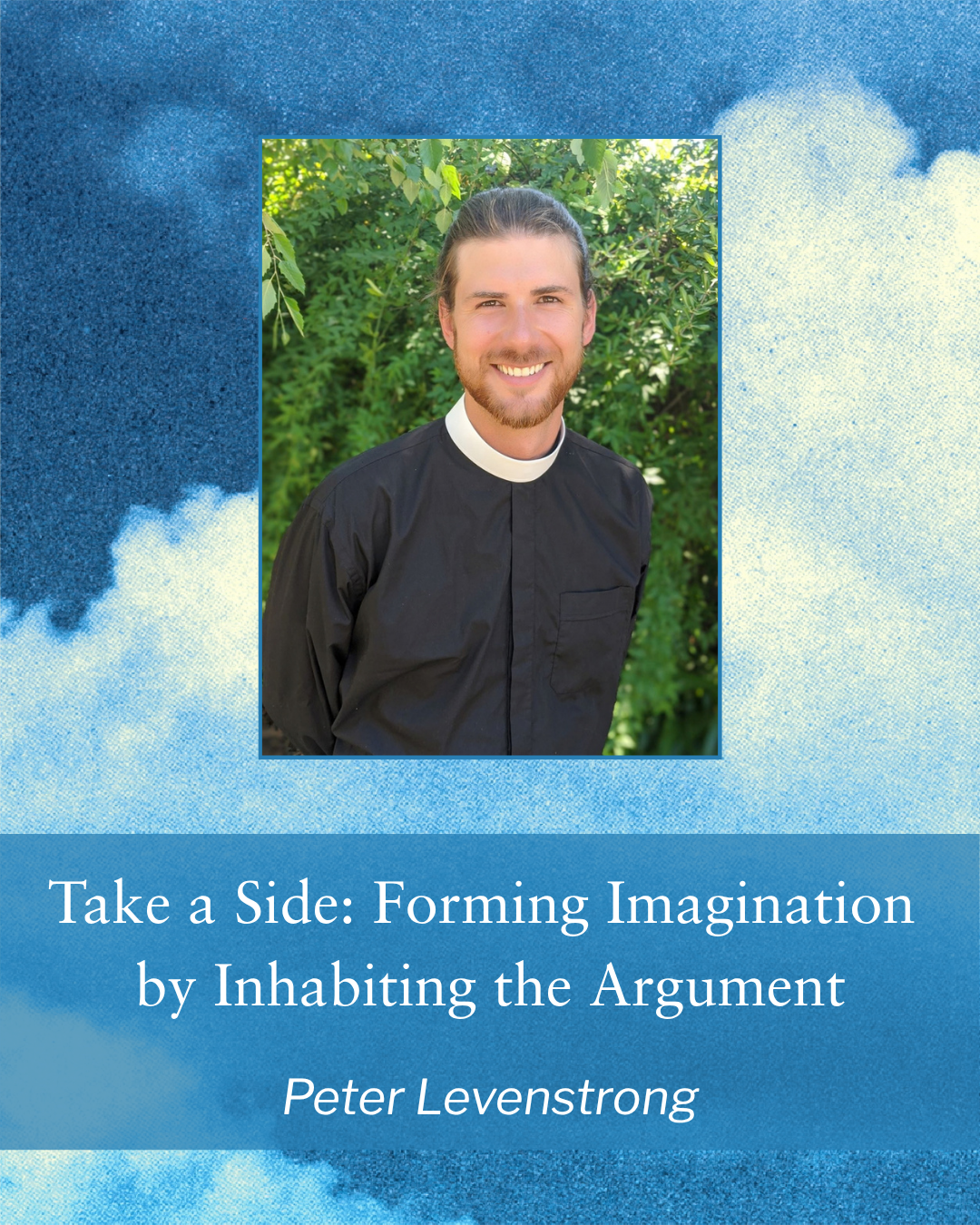
What if the people we form could inhabit a theological argument instead of just hearing about it? This hands-on workshop introduces the core engine of game-based formation with Living Stories Councils: taking on a position that is not your own and making the most compelling case you can for it.
The session draws on two original game-based curricula: Theses & Thrones (set during the English Reformation) and A House Divided (the four Jewish sects of Jesus' time). Players do not study the Sadducees or the Puritans from the outside. They join them, reason from inside that worldview, and learn to argue it with conviction and care. LS Councils resists setting up any good-guys-vs-bad-guys dynamic, and ensures all factions are on level ground. What grows in this environment is empathy, perspective-taking, and a far richer reading of Scripture and church history. When you have spent hours fighting for the Pharisees' vision, the Gospel reads differently.
We will try it ourselves. After a short look at how the full curricula work, participants will receive a faction file drawn from one of the games and break into groups to build a three-minute presentation defending their assigned position. Groups will present to the room, and then we will name together what just happened to us.
Participants will leave with an understanding of a new type of formation curriculum that is showing promising early results: not a role-playing game, not a board game, but a curriculum that gamifies theological engagement for the purpose of formation. The principle adapts to any age group and any contested moment in the tradition that groups want to engage with more deeply. The move underneath it all is simple to state and surprisingly powerful in practice: people are formed most deeply when they argue a conviction from the inside.
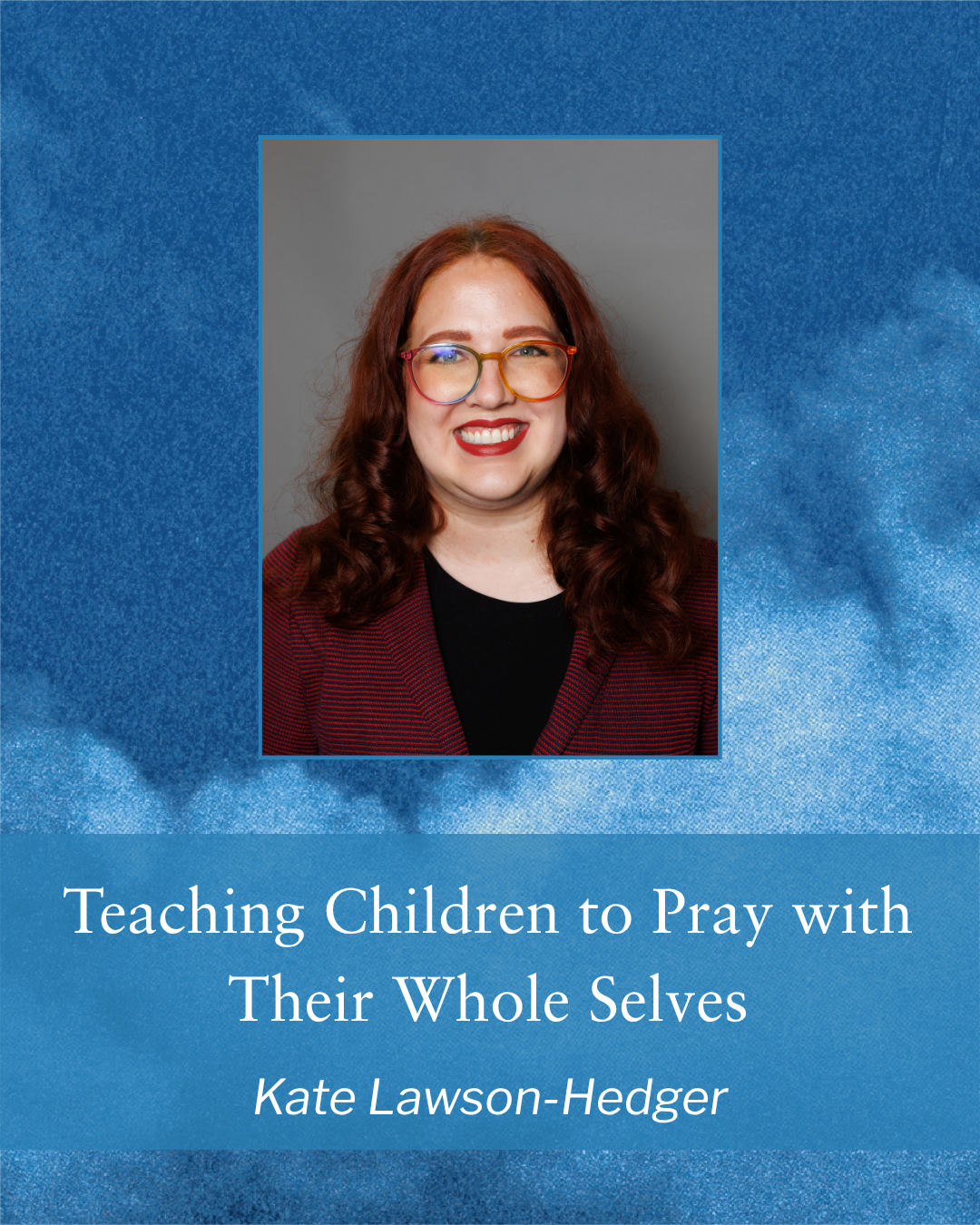
Scripture calls all of us, no matter our age, to love God with all our heart, soul, and might. Prayer is the avenue through which we cultivate this loving connection with God and we are invited to navigate this journey with our whole selves. “Teaching Children to Pray with Their Whole Selves” is a workshop that will engage Forma’s community in how to teach prayer to children in ways that engage the whole child—heart, soul, and might. Drawing on ancient Christian traditions and current research on child development, we will discuss why we pray with children and how to pray with children, offering several tangible practices to bring to a ministry context or into the home; for example, the Examen, full body prayers, and living out the Lord’s Prayer. We will also discuss how to pray with children who have disabilities, special needs, or are neurodivergent.Attendees will walk away with news ideas and practical methods to teach the children in their care and ministries to pray with their bodies, emotions, words, and more—with applications relevant to the child’s learning style. We will discuss practical ways to help nurture a connection with God in children, with tips on engaging them at different ages and stages, from infancy to the teen years.
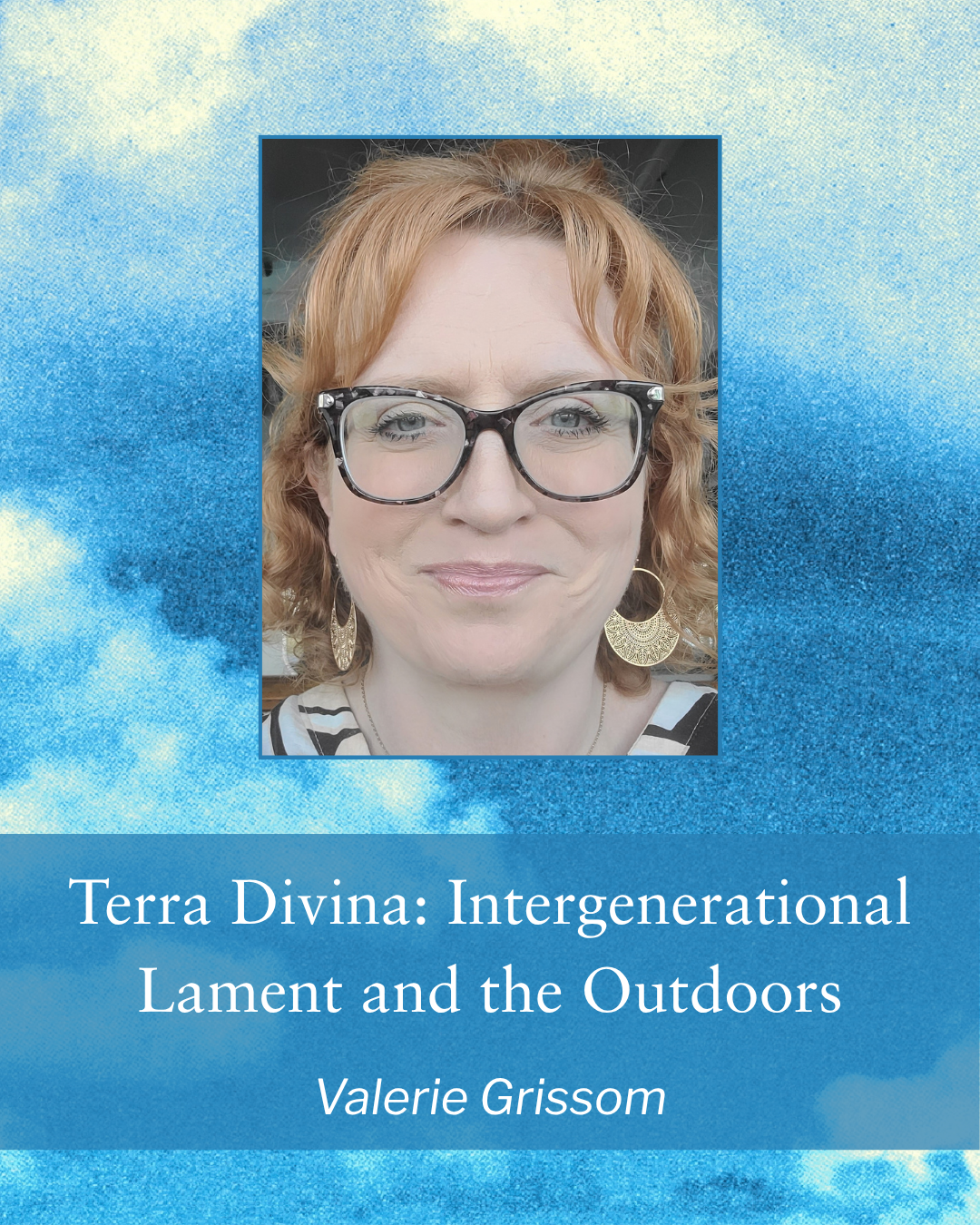
Sea, Sand, Sky, Grass, Dirt, Trees, Flowers, Birds, Wind, Snow, Rain, Sun - all of these can help us practice Terra Divina.
Terra Divina (“divine earth”/”terra”=earth) is the spiritual practice of connecting to the divine (God) while engaging with God’s creation. Valerie Grissom’s ongoing research project, Lament with Children and Youth in Worship and Daily Life, includes interviews from over 41 ministry leaders, therapists, teachers, researchers, and theologians, as well as a plethora of biblical and sociological research, but it also is a curation of multi-sensory, embodied practices of lament to empower youth and children to lament in Christian communities. One theme that recurs in Valerie’s research is the power of connecting people of all ages to God’s divine earth (or the outdoors) to engage in spiritual practices of lament.
This collaborative workshop will invite attendees to share and learn from one another, and to experience a variety of ideas for enabling people of all ages to practice intergenerational lament through elements of nature. These embodied terra divina practices can be adapted to be used in small groups, youth group, children’s ministry, adult ministry, congregational worship, spiritual direction, and so much more. Come to connect yourself in these powerful embodied terra divina practices, so that you might facilitate them with others.
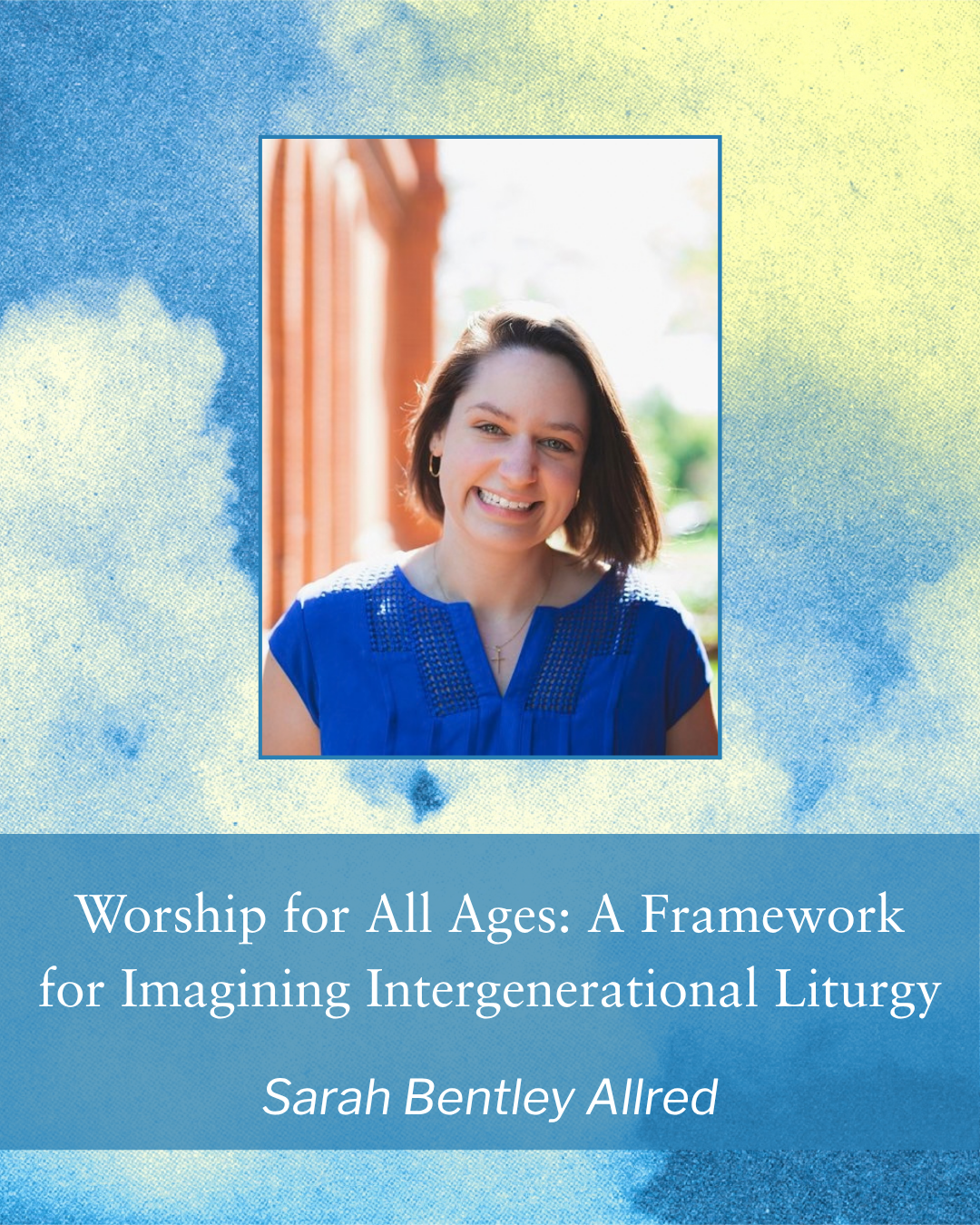
In many contexts, worship is highly adult-centered. Worship for all ages seeks to intentionally engage and equally value the gifts and needs of every generation. This workshop will explore the five core characteristics of all-age worship identified by the Roots & Wings grant team: intentionality, relationality, dignified reciprocity, flexibility, and empowerment. Together we will brainstorm practical ideas for implementing these characteristics and cast a vision for liberated liturgy that both honors our tradition and respects the dignity of every worshiper. Participants will receive a toolkit that can be used to identify which characteristics are especially strong in their context, and which need more support as well as a list of resources for diving deeper into each characteristic.
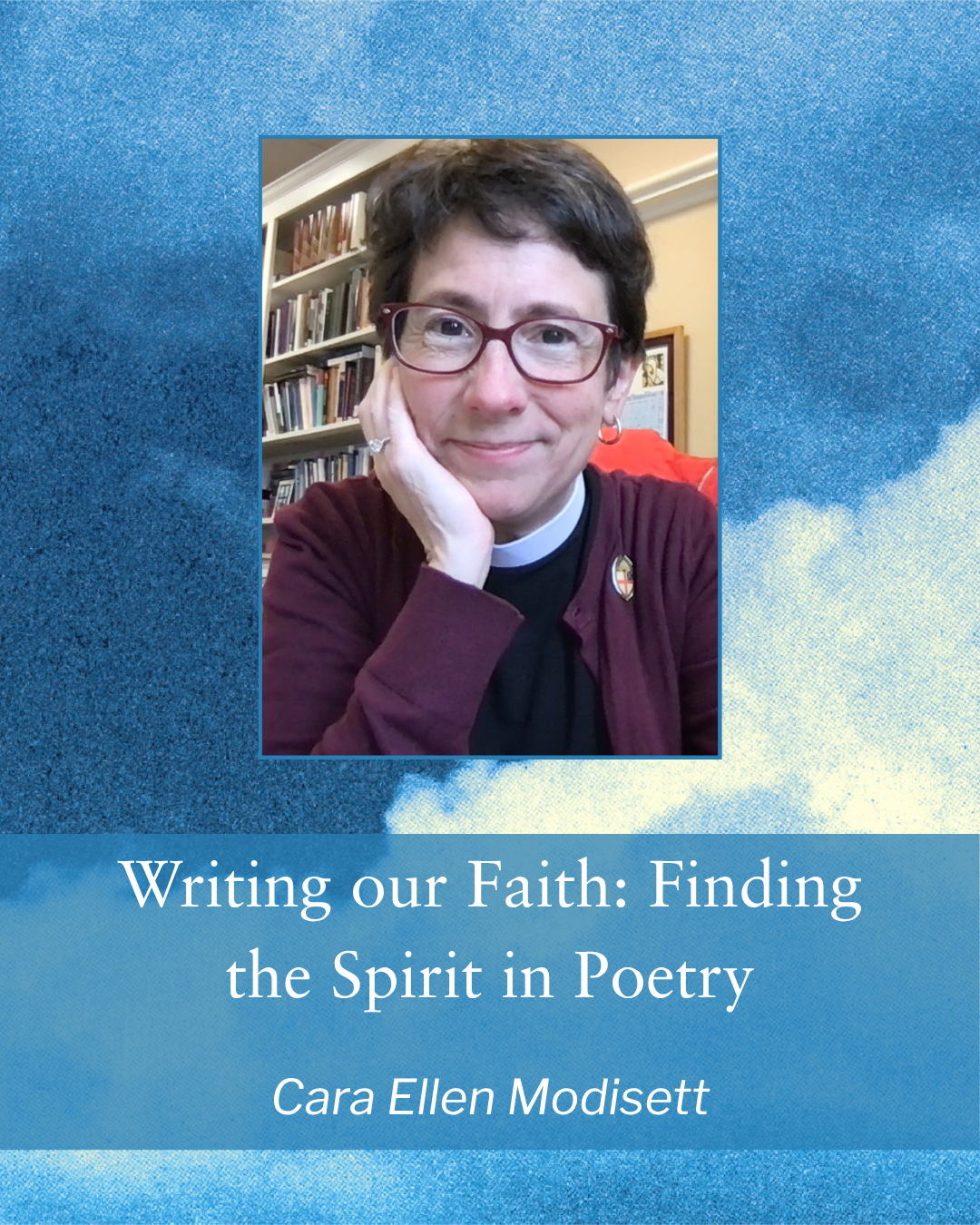
Writing our Faith: Finding the Spirit in Poetry is a workshop inspired by small groups I have led at St. John’s, Roanoke, Va., and Trinity Episcopal, Staunton, Va., based on the idea that poetry is sacramental language – in that it is both individual and universal, and concrete and infinite. Poetry can be a way into contemplative practice, spiritual discernment and theological conversation grounded in shared creative work, and the sharing of it can lead to profound conversation and over time create unexpected, spiritually connected community.
Participants in this workshop will come away with resources including a reading list, prompts and exercises, best practices for discussion and ways to deepen a group’s work over time (e.g. retreats, readings that invite the public, blogging, printing a chapbook or zine). Participants will experience an example session of Writing our Faith, which includes reading, discussing, writing and sharing.
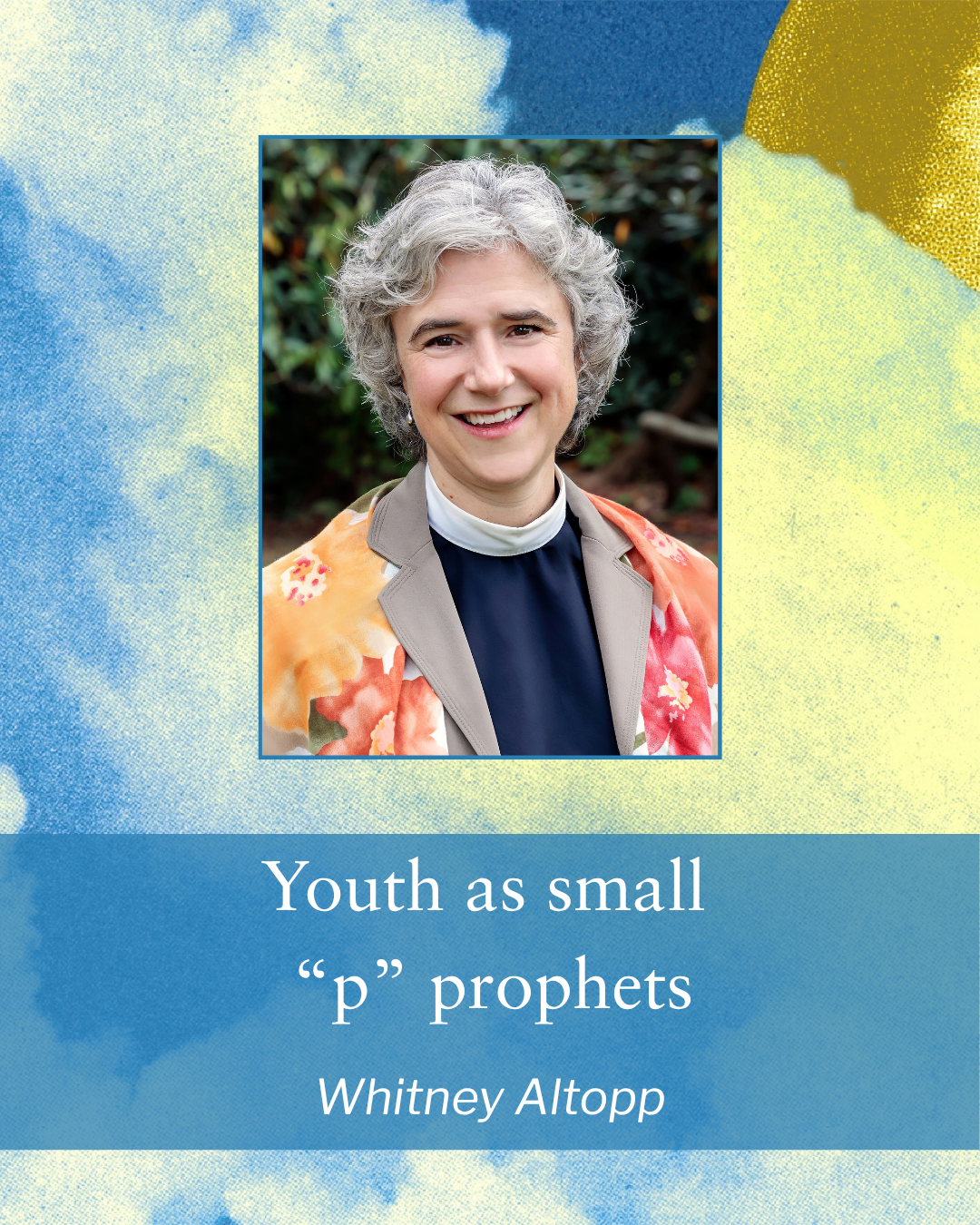
Walter Brueggeman wrote and spoke of the Prophetic Imagination, the ability to speak of God’s vision for God’s people. People in their middle adolescent years are able to do something similar. Newly equipped with the ability to think about thinking, youth find a whole new world opened up to them. This workshop focuses on how youth can unsettle a congregation because of their newfound ability to imagine something better than what they see. This unsettling, like the Prophets before them, opens up the community of the faithful in the church to reconsidering God’s action in their midst. Aided by the research of Eric Erikson and James Fowler, we consider the unique contributions to the church afforded by the adolescent stage of human development. We will consider the “longing for fidelity, transcendence, and communion” of this age group as Kenda Creasy Dean so beautifully wrote about in Practicing Passion: Youth and the Quest for a Passionate Church. The presenter will use her own research into the Beloved Disciple in John’s Gospel to illustrate the power of this particular stage of life to open up the community to more faithful discipleship of Jesus. Attendees can expect to leave this workshop with a newfound or strengthened perspective on the blessedness of this age group for the sake of the entire church.